Gandhi International Publications
Gandhi International now has its own publishing house, and several publications are available. You can order them from Louis Campana: campana.louis@gandhiinternational.org
Chroniques intemporelles et anarchisantes d'un catholique gandhien - Louis Campana - €24 - Éditions Baudelaire - 328 pages

At the Nuremberg trial, men were sentenced to death for having obeyed orders subsequently judged unjust. With kindness and lucidity, Louis Campana brings out of the shadows those who, conversely, disobey the established order with self-denial, steadfastly refusing the injunctions of the powerful, staking their lives in the pursuit of that truth which the Buddha calls “Infinite Light and Awakening”, and Jesus “the Way of Life”. Two men, Gandhi and Lanza del Vasto, are cited repeatedly throughout these chronicles, as banners of a refusal of violence, lies, easy profit and abusive domination. Etty Hillesum, in the Amsterdam ghetto, declares that “life is beautiful” while knowing her departure for Auschwitz is imminent, because being conscious of one’s “Life” is a victory. The author never condemns anyone, but questions the reasons for wars and the will to wage them. For him, war is permanent and economically willed.
Gandhi - The Solution Lies Within Us - €15 - Script: Louis Campana & Freddy Stoof - Illustrations: Marc Ingrand - 60 pages
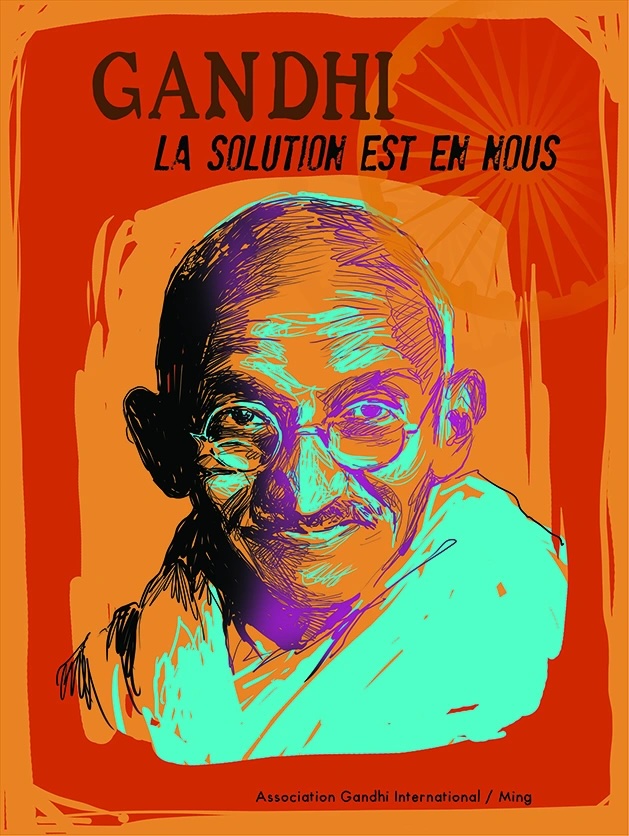
Humanity is at war with itself: we are destroying Nature, which is the basis of our existence and to which we belong, while never ceasing to fight one another. No technological solution will allow us to remedy this unprecedented situation in human history; the solution must be drawn from within ourselves. This is what Gandhi believed. But the most radical thinker and actor in the entire history of politics of all time is almost entirely passed over in silence in our era—why?
Perhaps the answer lies in the question itself, for his radicalism is unsettling; it goes far beyond all others and confronts us with our individual and collective responsibilities. He was the very opposite of a dogmatic ideologue, far removed from bearded philosophers and professional politicians, for he applied his own principles to himself, embodying them as a pragmatic man, thus offering the example of his own life.
What would our world be like if we had listened to him? This is the question explored by this illustrated essay, blending history and fiction. In this truly “anti-dystopian” narrative, we start from historical reality at the very end of the Second World War and imagine a story in which the undeniable humanist momentum that had taken concrete form at that moment in history through founding agreements and treaties, would not have been overtaken by the states’ will to power, and would even have led to the practical application of the great Gandhian principles.
Ashrams of Gandhi and Lanza del Vasto - Siby K. Joseph - €9 - 128 pages
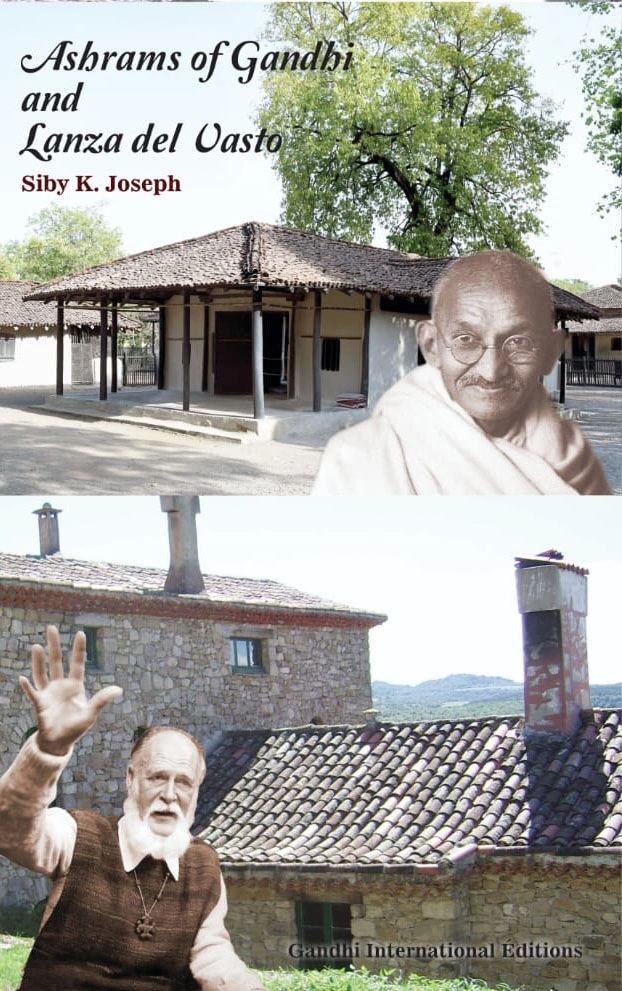
The book Ashrams of Gandhi and Lanza del Vasto written by Siby K. Joseph, Director, Sri Jamnalal Bajaj Memorial Library and Research Centre for Gandhian Studies, Sevagram Ashram Pratishthan, Wardha throws light on ashram experiments and constructive activities undertaken by Mahatma starting from Phoenix Settlement, Tolstoy Farm in South Africa to Satyagraha Ashrams at Kochrab and Sabarmati Ashrams in Ahmedabad and finally at Sevagram Ashram in Wardha. In addition it discusses the Community of Ark of Lanza del Vasto, salient features of the community life of Ark. It also carries a chapter written by Margarete Hiller, currently serving as the international leader of the Community of the Ark: Non-violence and Spirituality, on the theme of the Ark Communities today. The book inter alia discusses the significance of Gandhi’s Ashrams for posterity, basic education as an outcome of Gandhi’s experiments in Ashrams, Rules and Discipline of Ashrams, the evolution of Mohandas to Mahatma through ashram experiments and the demand for World Heritage Status to ashrams. In the appendices the Prayer of Sevagram Ashram, Common Prayers of the Ark and photos of Ashrams of Gandhi and Lanza del Vasto are included.
Louis Campana President, Gandhi International, France wrote the foreword of the book.
The book Ashrams of Gandhi and Lanza del Vasto, written by Siby K. Joseph, Director of the Sri Jamnalal Bajaj Memorial Library and Research Centre for Gandhian Studies, Sevagram Ashram Pratishthan, Wardha, sheds light on the ashram experiments and constructive activities undertaken by the Mahatma, from the Phoenix Settlement, the Tolstoy Farm in South Africa, to the Satyagraha Ashrams at Kochrab and Sabarmati in Ahmedabad, and finally to the Sevagram Ashram in Wardha. It also discusses the Community of the Ark of Lanza del Vasto, as well as the salient features of the community life of the Ark. It notably includes a chapter written by Margarete Hiller, currently the international leader of the Community of the Ark: Non-violence and Spirituality, on the various Ark Communities today. The book also discusses the significance of Gandhi’s ashrams for posterity, basic education as an outcome of Gandhi’s experiments in ashrams, the rules and discipline of ashrams, the evolution of Mohandas into Mahatma through ashram experiments, and the demand for World Heritage Status for ashrams. The appendices include the Prayer of Sevagram Ashram, the Common Prayers of the Ark, and photos of the ashrams of Gandhi and Lanza del Vasto.
Louis Campana, President of Gandhi International, France, wrote the foreword of the book.
A Happiness to Build... between wanderings and certainties - Louis Campana - €24 - 400 pages
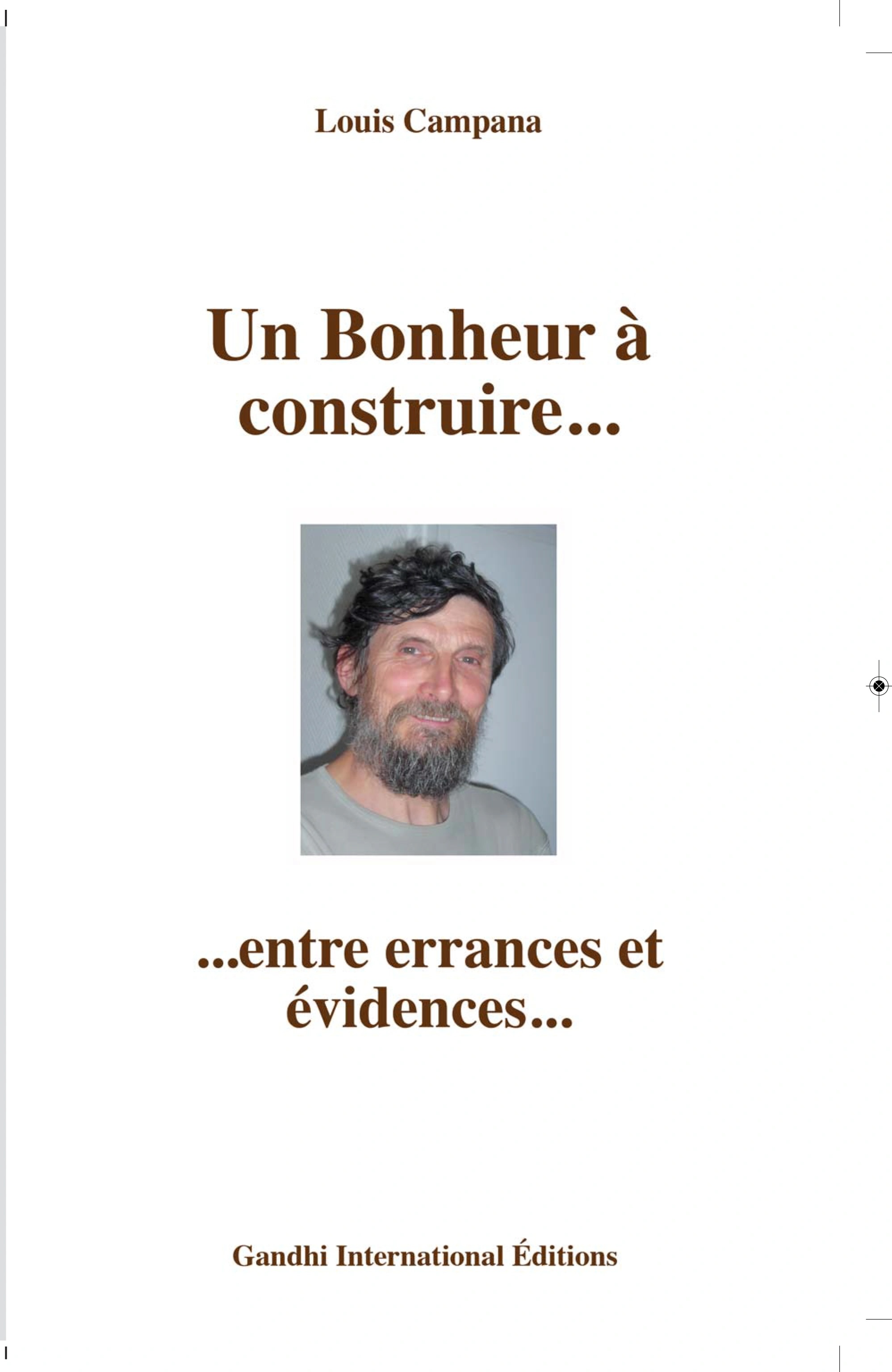
The next day, a big, sturdy Hindu man with a black beard is welcomed at this place. During the meal taken together that evening, he asks all six guests the killer question. “Are you happy?” Coming from a tall, unmarried young man, with the profile of an eternal student, this hardly comes as a surprise—one must indeed question one’s own future and invite strangers to unmask themselves. However, we learn over the course of the conversation that he is a computer scientist, holds a highly coveted position in the business world in Mumbai, and belongs to an extremely wealthy family that owns numerous hospitals throughout India. “I learned,” he tells us, “to observe the practice of my religious tradition, I did so for many years, but now I have decided to stop and try to understand the world differently; I want to understand what people like you think, what you do, what motivates you, why you are here, are you happy?” To his question, I immediately reply that it should be split into two sub-questions. The first would be “Why be happy?” and the second “How can one achieve it?” Why? I tell him of the imperative necessity for man to be happy. Like a reflex, a basic instinct. There is no guarantee he will succeed, but it is an inner force that pushes him every day to lay the groundwork for this quest.... In the Ethics, Spinoza says that “All things excellent are as difficult as they are rare!” After instinct, then, it is intelligence (the intellect) that seizes upon the imperative necessity to be happy. Then the heart, which makes it concrete. Thus happiness is a matter of will, daily work, a solid construction. It is nothing linear and cannot be measured in permanent triumph. It is subject to failures and successes, wanderings and certainties, the former (failures) preparing the latter (successes), the latter bringing about that vanity which destroys all effort. This too, this form of momentary despair, contributes to the edifice of happiness. How? This book, modestly, attempts to answer that, between the search for truth about oneself, self-mastery, and love of the Other...
What Is a Non-Violent Economy? - Louis Campana - €16 - 220 pages
There are therefore indeed two economic visions: − One in which responsibility and power lie at the level of the individual and the village or small group, which decides for itself and those around it, with the aim of best meeting the needs of the group. This is what I call a non-violent economy! − And the other, dominating, impersonal, conquering, with an implacable logic that serves the interests of a planetary oligarchy playing with fictitious money, but whose debts are very real for the peoples who bear them. This is what I call a predatory economy! Shall we dare to call this oligarchy a mafia, legal and protected by law? Yes, we can, and I say it. Admittedly, this language is not very diplomatic, but enough of doublespeak and lies! This world that endlessly manufactures the destitute must be denounced; it will lead only to chaos! And it is already chaos, with wars, unrest, terror, famines, and migrations for those who endure, every day, the humiliation of hunger, forced departure, and unemployment in a world of opulence. How can we accept the prevailing emptiness, and the cynicism of rulers whose only aim is clearly to remain in a position of strength in order to stay in power? Indeed, what can we expect from a society founded on fear, threat, profit, or domination? Every man, every woman, every family should be given the opportunity to take charge of their own life, provided that access to land, to a workshop, to a roof over their head is made possible, prioritized, and legitimate. And this is obviously possible—it simply requires the will.
Lanza del Vasto, or Community Experimentation - Frédéric Rognon - €7
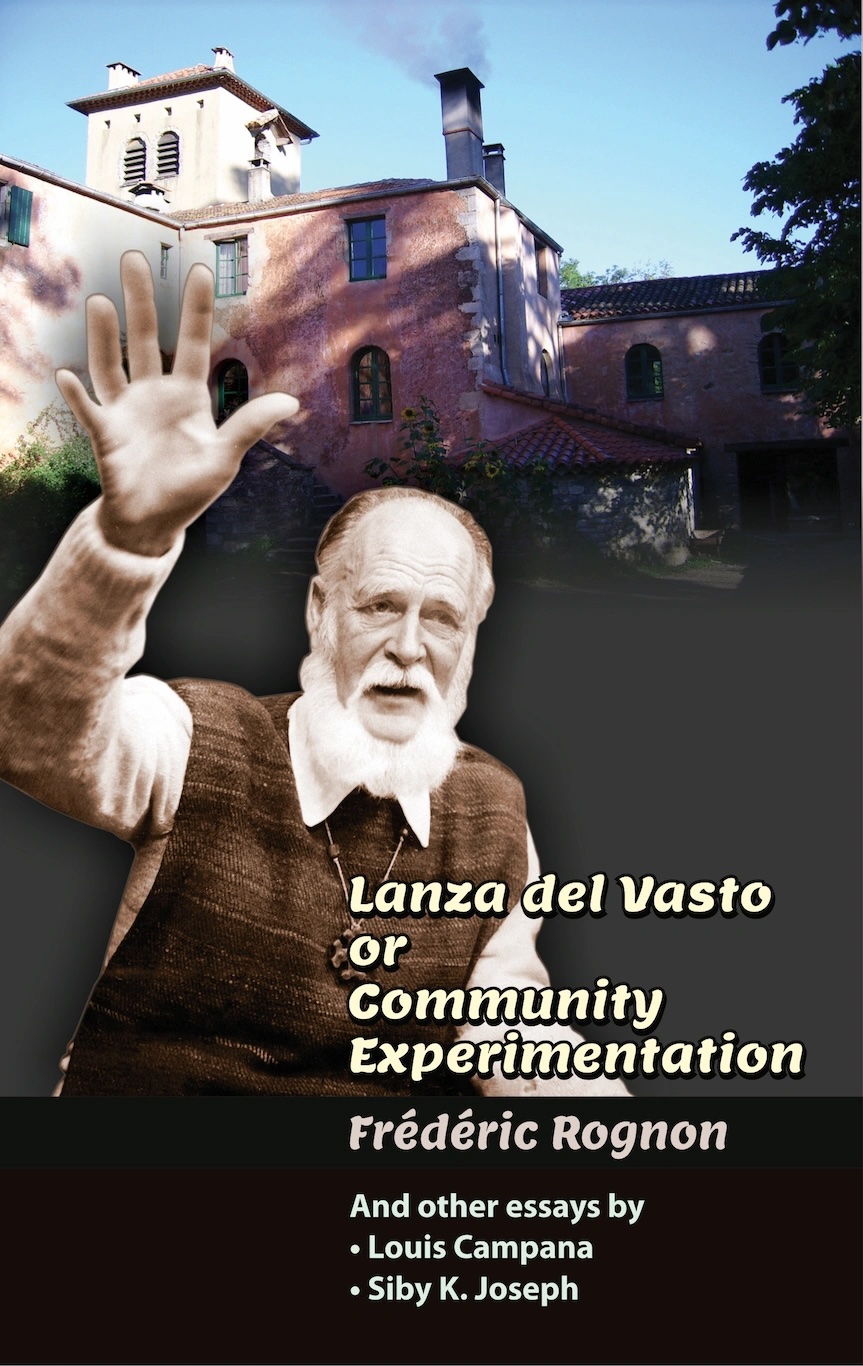
On the occasion of the Sevagram International Conference to be held in October 2017, jointly organised by Gandhi International, France and Institute of Gandhian Studies Wardha, India, it would be appropriate to publish the English translation of the book written by Frédéric Rognon viz. \"Lanza del Vasto or Community Experimentation\" for wider dissemination among public and more particularly those interested in Gandhian studies. This book was originally published in French by \"Le Passager Clandestin\" in 2013 in France. It is now published in English by Gandhi International in collaboration with the Institute of Gandhian Studies along with some new essays.
Can we make a link between Gandhian thinking and the collection of books published by Le Passager Clandestin titled \"the Precursors of Degrowth\"? I think this link could be made indeed, and that is the reason we are publishing this book on this occasion.
The economic war in which we are permanently engulfed in is far-off from the Gandhian Swadeshi, which essentially stand for harmony and care for the others, particularly for the most deprived ones.
Lanza del Vasto has dealt in his works with issues like the reappropriation of military and civil nuclear usage by citizens as these are too serious concerns to be left in the hands of politicians and military men. The politicians are too much diffident and morally incapable and the military is too much under the political ideology of ruling class.
It is the same in the case of agriculture which is in the hands of the powerful lobbies of chemical industries. The industrialization of agriculture results in disastrous and poisonous food filled with pesticides, insecticides and other kinds of \"cides\". This is very much against the organic agriculture that can provide massive employment opportunities and healthy food compatible with Gandhian principles.
It is good to know that organic agriculture has been declared indispensable to eradicate starvation on the planet by Jean Ziegler and Olivier de Schutter, UN rapporteurs on the right to food, who openly condemn the industrial agriculture.
Community experimentation is a laboratory for a civilisation based on absence of fear or threat and where profit and domination are explicitly declared as illegal. Besides livelihood agriculture, this civilisation would also develop craftsmanship accessible to all and the splendour of celebration of seasons, without artificialities or unnecessary fanfare.
The present world is not favourable to the poor people since it throws them in stress, speed and crazy urbanization. So they are force to live in degradation and indignity.
Developing small communities where everyone is recognized and gets a proper place has become a social necessity. There is no need to wait for building up such a well knit and happy fraternity.
We should take this opportunity to strengthen the links on all continents among all Gandhian and non-violent movements in order to raise a common platform and support each other in non-violent action.
I hope the international conference and the publication of this book would contribute significantly to such a perspective.
So That the Earth May Live - Booklet and summary of the symposium in Brin (Senegal), February 2017 - €10

\"So that the Earth may live\" is a project that grew because our contemporaries are turning away from their peasant roots and, increasingly, devaluing the trades of the land. But as long as the men of this century do not eat plaster, cement, or plastic, and continue to eat the fruit of peasants’ labor, they will be forced to acknowledge that without peasants, survival on earth is impossible. Of course, there is what all the great orators of the world propose: industrial chemical agriculture, but these are just words, and ills, with dramatic consequences. Why then have Monsanto and Bayer fallen in love with one another? One patents GMO or mutant seeds, the other sets up laboratories to treat all the side effects of tampered-with food... I also wonder about this tragedy that regularly unfolds before our eyes off the coast of Libya, where thousands of Sub-Saharan Africans come to lay down their lives as victims of a world in disarray. The Mediterranean is a place of pleasure, joy, and vacations, a link between Africa and Europe, not a graveyard for the outcasts of a world that created this debacle. Indeed, those who come to die are migrants, refugees, candidates for another life. The causes: civil war or guerrilla warfare, economic war, climate change. Many can no longer live in their own homes; their land is seized or handed over by the ruling oligarchies to the great international predators, and this is unacceptable. During this symposium we will ask ourselves why these migrations occur, why such large numbers of people flee toward the illusion of the West (for we will have the opportunity to discuss it, the West is not the Eldorado people believe it to be, since it imposes an economic war on the entire world), and what means of resistance exist, not to merely survive, but to live with happiness and joy on our respective lands. Under the patronage of Gandhi, this symposium is open; we will open up paths and will subsequently try to work together, for it is not enough to share ideas—we must then establish links and platforms to bring our efforts to fruition.
Caste-based discrimination in the Indian Church: Lessons from Gandhi's fight for human dignity - Siby K. Joseph - €9 (English text)
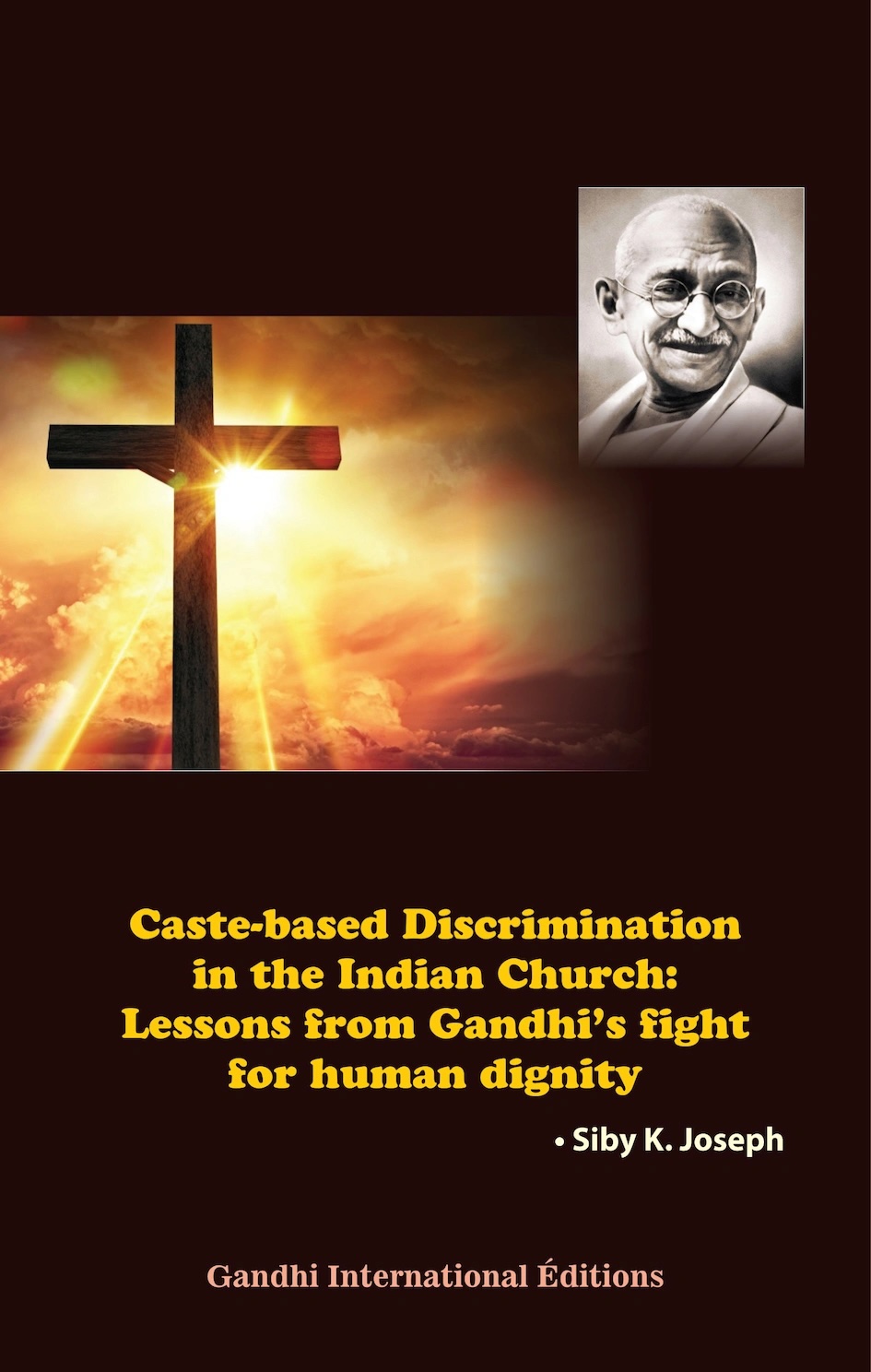
The present work is a revised version of a lecture delivered at a Symposium on the topic “Caste-based Discrimination in the Indian Church” organized by the Carolian Theological Forum of St. Charles Seminary, Nagpur on October 2, 2017, by Siby K. Joseph. This work is divided into three parts. The first part of the study analyses the issue of caste discriminations in the Indian Church. The second part describes Gandhi’s fight against caste discriminations for restoring human dignity. It reviews all major writings as well as actions of Gandhi on these issues to understand Gandhi’s mind and his actual practice. This analysis gives the reader a clear picture of all the issues involved in respect of Gandhi’s approach to caste and untouchability. What Christians can learn from Gandhi’s strategy against caste discrimination is summarised in the last part of the study. Some important writings of Gandhi and Ambedkar are given in the appendices to have clear understanding of their viewpoints. It is hoped that the present work would further stimulate introspection, reflection and deliberation on the theme and finally to root out this evil practice from the Christian community and from the Indian society at large. Further, it will remove misconceptions about Gandhi’s very approach on these issues in the minds of readers.
Praxis of Gandhian Perspectives in the Present Indian and Global Context - Siby K. Joseph - €9 (English text)
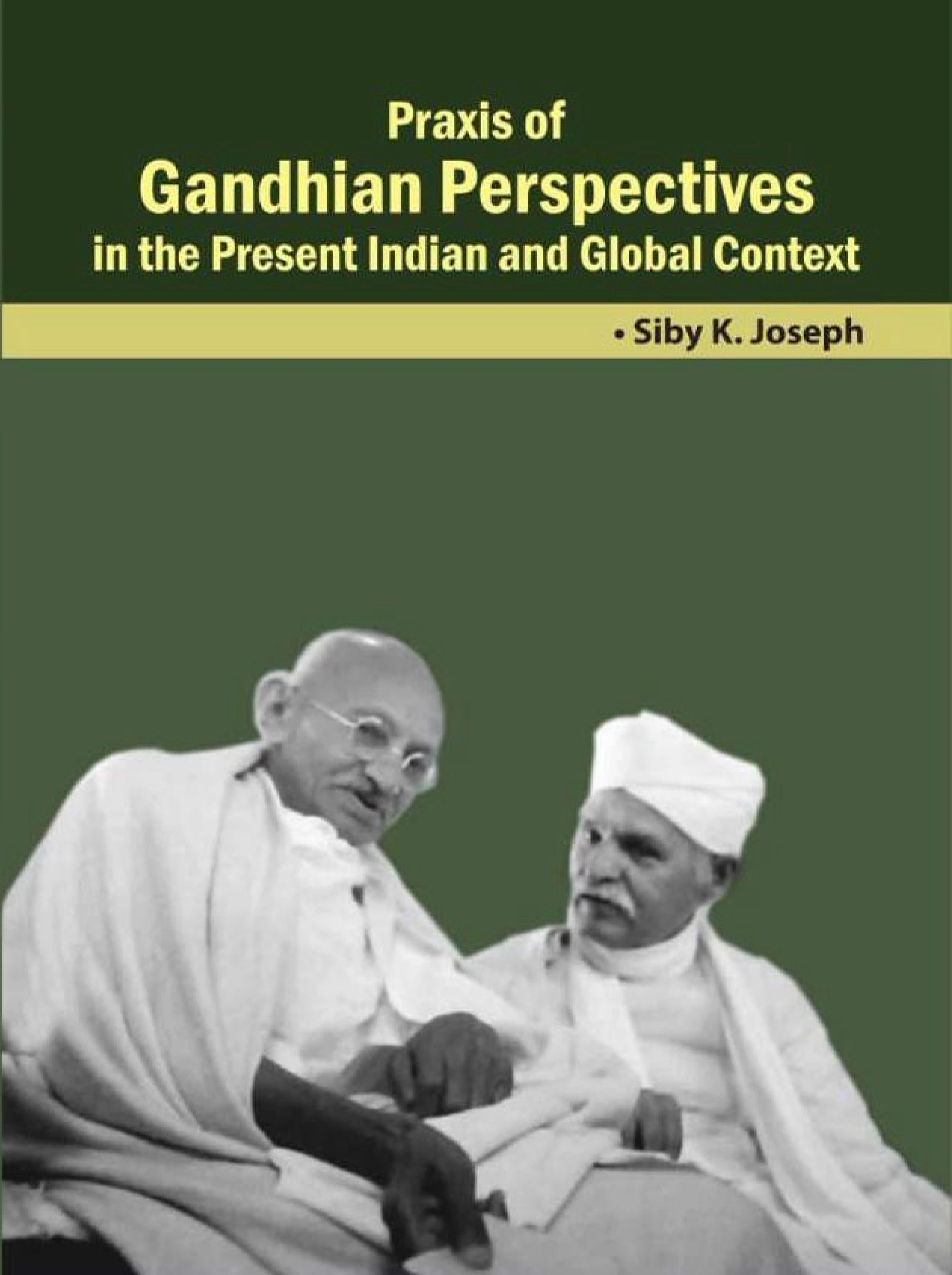
This book contains the Keynote Address delivered by Siby K. Joseph at the National Seminar on \"Ideologies and Perspectives in Indian History\" at Banaras Hindu University on March 06, 2018. It also includes the historic speech delivered by Mahatma Gandhi at Banaras Hindu University in 1916.
Lanza del Vasto - A Messenger of Peace - Siby K. Joseph - €9 (English text)
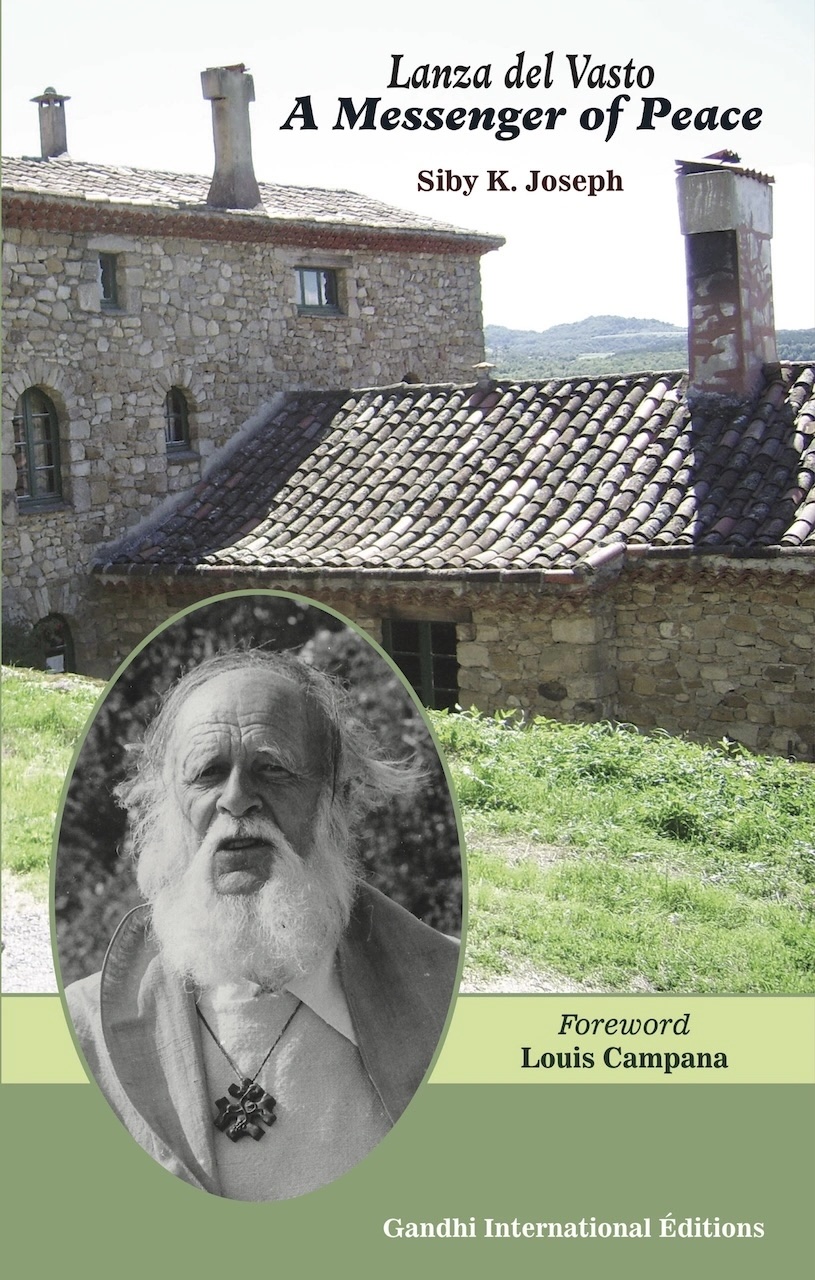
This book deals with life and legacy of Lanza del Vasto also known as Shantidas, an Italian artisocrat, philosopher, thinker, artist, poet and above all an ardent non-violent activist.
It comprises of five chapters focusing on his contributions towards peace and non-violence. It also has some important writings and documents of the Community of the Ark.
Inspired by the writings of Romain Rolland on Gandhi, Shantidas travelled all the way from Europe to India to meet Mahatma Gandhi at Sevagram in 1937. His three months stay with Gandhi convinced him that non-violence and other aspects of Gandhian thought could provide an answer to the civilizational crisis afflicting the western society. Consequently, he became a true messenger and practitioner of peace and non-violence through Community experimentation and peace action. Barring English, there are a lot of writings in some of the European languages on his life and work. This book is a modest attempt to fill the gap.
We hope that his book will be of immense interests for academics, activists and even for general readers.
Foreword by Louis Campana.